Drive Zone Online Police Mode: How to Play as a Cop
Playing as a cop in Drive Zone Online means police-style roleplay in multiplayer: outfit a car with a police livery and light bar, join or host a roleplay room with friends, and run chase scenarios with agreed rules. Pick an agile car, learn PIT and roadblock tactics, and set the rules before the sirens start as of 2026.
Every open-world racing game eventually answers the same question: what if I’m the one doing the chasing? In Drive Zone Online, playing as a cop is one of the most popular ways the community keeps the game fresh — part roleplay, part competitive driving, and completely player-driven.
There’s no single “press here to become police” button. Drive Zone Online police mode is something you set up: the right car, the right look, the right room, and the right rules. Here’s how to do it properly.
What “Police Mode” Actually Means Here
Let’s be honest up front: police gameplay in Drive Zone Online is community roleplay, not a built-in career mode. You and other players agree that some of you are cops and the rest are racers, then you play out pursuits across the open world with house rules everyone follows.
That might sound improvised, but it’s exactly why it works so well. The game’s 20×20 km map, 32-player servers, and deep car customization give you everything a pursuit needs: room to run, room to hide, and cars that can be dressed up to look the part. Some of the best sessions in the game happen in these player-run scenarios. Our game modes guide covers the official structured modes if you want competitive play alongside your roleplay.
Building Your Police Cruiser
Looking the part is half the job. A proper police build tells everyone in the lobby what role you’re playing before you type a word.
Choosing the car
You want a balance of top speed, acceleration, and handling — pursuits go everywhere, from highways to tight city streets. Good interceptor candidates are mid-to-high-tier sports cars and sporty sedans: fast enough to catch runners, agile enough to stay with them through corners. Avoid ultra-fragile hypercars; you’ll be making contact, and you want something that survives it.
The livery
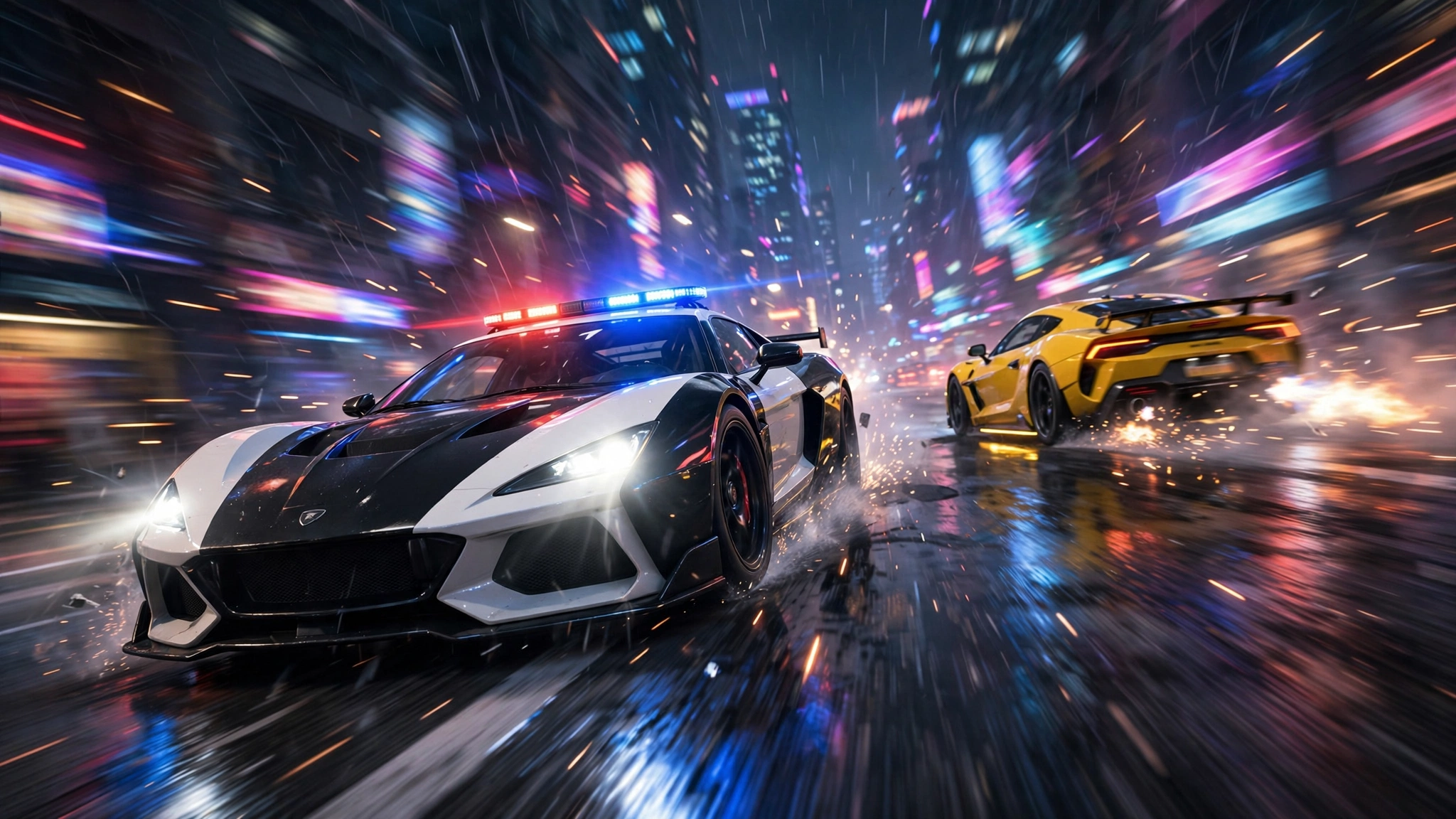
The classic black-and-white scheme is the universal “I’m a cop” signal. Use the livery editor to paint the body black (or dark blue) with white doors, hood, or trunk, and add any stripe or badge-style decals the editor offers. Keep it clean and recognizable — the goal is instant readability at 200 km/h, not artistic expression.
Lights and extras
If the customization options include light bars or roof accessories, mount them. Red-and-blue flashing lights are the single most recognizable police marker in any racing game. Pair them with a loud horn if you want the full effect — nothing announces a pursuit like sirens echoing through a tunnel.
Tuning for pursuit
Tune for acceleration and grip over outright top speed. Most chases are decided in the first thirty seconds and through corners, not on endless straights. Prioritize tires, brakes, and suspension; a cop car that can’t turn is just a fast decoration.
Finding or Hosting a Police Roleplay Room
You need willing participants, which means multiplayer. The easiest path is playing with people you know — one message to your crew and you’ve got a lobby. Check our guide to playing with friends if you haven’t set up private sessions before.
For public rooms, look for lobbies with “police”, “cop”, “RP”, or “roleplay” in the name or description. These are player-run and each has its own culture, so observe for a few minutes before jumping in as a cop. If no suitable room exists, host your own and name it clearly — “POLICE RP | cops vs racers | rules in chat” tells everyone exactly what they’re joining.
A good room needs a critical mass: two or three cops and a handful of racers is the sweet spot. Too many cops and nobody can escape; too few and it’s just free-roam with extra steps.
Setting the Rules (Don’t Skip This)
Every good police session starts with agreed rules. Without them, it’s just ramming. With them, it’s a game. Standard house rules include:
- Bust condition: how does a chase end? Common versions: the cop must hold contact for 3–5 seconds, box the racer in for a full stop, or force them off the road.
- Escape condition: how does a racer win? Usually breaking line of sight for a set time (e.g., 60 seconds) or reaching a designated safe zone.
- Boundaries: is the whole map in play, or just the city? Agree upfront.
- Ramming limits: PIT maneuvers allowed, but no full-speed t-boning into walls — keep it sporting.
- Respawn rules: busted racers sit out a round, switch sides, or respawn as cops — pick one and stick to it.
Post the rules in chat when the room fills. Five minutes of setup saves an hour of arguments.
Cop Tactics: How to Actually Catch People
The PIT maneuver
The classic: pull alongside the racer’s rear quarter panel and steer into it, spinning them out. It takes practice — too much angle and you’ll spin yourself. Start gentle in an empty lot before trying it at speed.
Teamwork and boxing
One cop chases, the other cuts off. Coordinate in voice or chat: the lead car pressures from behind while the second car takes parallel streets to intercept. A racer can dodge one cruiser; dodging a coordinated box is much harder.
Roadblocks
On highways and bridges, park across the road ahead of the pursuit. This only works with advance warning from the chasing car, so communication is everything. A surprise roadblock at a tunnel exit is devastating.
Know the map
Cops who know every alley, jump, and shortcut catch people; cops who don’t, don’t. Speed zones and choke points are natural ambush spots — learn where racers have to slow down and be waiting.
Flipping It: Escaping as a Racer
Half the fun is being the one running. If you’re on the other side of the sirens: know two or three hiding spots (parking garages, tunnels, dense alley networks), break line of sight before the timer starts, and never take the obvious highway when the back roads exist. Change direction at intersections to force cops to guess, and remember — a cop who can’t see you can’t catch you.
Frequently Asked Questions
Is there an official police mode in Drive Zone Online?
As of 2026, police gameplay is player-driven roleplay rather than a dedicated built-in mode. The community organizes it through multiplayer rooms with agreed rules, using police liveries and custom builds to play the part.
What’s the best car for playing as a cop?
A mid-to-high-tier sports car or sporty sedan with strong acceleration and grip. You want something fast enough to catch runners and tough enough to survive contact — pure top-speed hypercars are less useful than balanced interceptors.
How do I make my car look like a police car?
Use the livery editor for a black-and-white paint scheme, add stripe or badge-style decals, and mount a light bar or roof lights if the customization options include them. Recognizability matters more than detail.
Can I play police mode solo?
Not really — the whole concept needs other players as racers. You can practice PIT maneuvers and pursuit driving lines solo, but the actual gameplay is multiplayer by nature.
What are the standard rules for cop vs racer rooms?
There’s no universal rulebook, but most rooms agree on a bust condition (e.g., 3–5 seconds of contact), an escape condition (e.g., 60 seconds out of sight), map boundaries, and ramming limits. Always check the room’s specific rules before playing.
Do I earn rewards for playing as a cop?
Roleplay sessions don’t have their own official reward track — the payout is the fun. You still earn the usual participation-based progression from driving, drifting, and time spent in multiplayer, just like any other session.
Want more Drive Zone Online tips & tricks?