How to Drift in Drive Zone Online Like a Pro — Settings, Cars & Technique
Quick Answer: To drift in Drive Zone Online, take a rear-wheel-drive car, tap the handbrake as you turn into a corner to break the rear tyres loose, then counter-steer — steer the way the rear is sliding — and balance the throttle to hold the angle. In DRIFT mode you score for angle, speed and how long you keep the slide going through linked corners, so clean chains beat one big wild moment.
Drifting is the skill that turns Drive Zone Online from a cruising game into a scoring game. The open world is a 20×20 km coastline of city streets, a port, a desert airfield, a racing track, highways and beach roads — and the game pays out money for drift points even in free roam, so every practice slide earns its keep. This guide covers the full path in order: the right car, the setup direction, the step-by-step technique, and how to turn single corners into chained drifts. If you are still on the download and install side of things, our complete Drive Zone Online MOD APK guide covers the game itself first.
Pick the Right Car First
Drivetrain matters more than horsepower. A drift is a controlled rear-end slide, and the rear wheels can only keep sliding under power if they are the driven ones — so learn in a rear-wheel-drive (RWD) car. Front-wheel-drive cars pull themselves straight the moment you add throttle, and all-wheel-drive cars split their power between both ends, which makes them want to straighten out or push wide instead of holding an angle. Both are fun later; both teach bad habits now.
Power is the second filter. A very powerful car breaks traction so violently that the slide goes from start to spin in a blink, and you learn nothing from it. A weak car cannot keep the rear wheels spinning through a long corner. The game’s garage runs from vintage cars and SUVs up to supercars and hypercars — and the hypercars are exactly the wrong teachers. Choose something in the middle: enough power to hold a slide, tame enough to forgive your mistakes.
Forgiveness is the third filter. A car with a longer, calmer chassis rotates slowly, giving you time to catch mistakes; a short, nervous car snaps around before you can react. You will spin while learning — everybody does. The right car makes those spins slow and readable instead of instant.
We rank the specific cars worth your time in our best drift cars guide, including sensible picks for the standard game. If you play the all cars unlocked mod build, the whole garage is open from the start, so you can test three or four candidates back to back and keep the one whose slides you can actually catch.
Set Up the Car Before the Technique
Drive Zone Online includes suspension and camber adjustment, alongside engine and gearbox tuning — but for drifting you only need to nudge two things before your first session. Everything here is direction, not magic numbers: every car responds a little differently, and our full drift tune settings guide breaks the setup down further.
Suspension — soften the rear slightly
A rear end that is a touch softer than the front transfers weight more gently and lets the tail step out progressively instead of snapping sideways. Move the setting a small step at a time and test it. Big changes make the car feel vague everywhere, in a straight line as well as in the slide.
Camber — a little up front, near neutral at the rear
A small amount of negative camber on the front wheels helps the tyres keep a healthy grip patch while you are counter-steering at full lock, which is exactly when you need the front end to keep working. Keep the rear close to neutral: rear grip should break away predictably when you ask it to, and too much rear camber makes the breakaway inconsistent from one corner to the next.
Leave the power alone — for now
Engine upgrades make slides easier to start and harder to control. Learn the technique on the stock or near-stock car; add power once holding an angle starts to feel boring.
Controls — put the handbrake under your thumb
Arrange your control layout so the handbrake is a quick tap away from your steering input, without looking down. Drifting is a rhythm of small, fast inputs; a handbrake you have to hunt for will always be a beat late.
The Basic Drift, Step by Step
Use a wide, empty corner for your first attempts — the port and the airfield from the practice route below are ideal. Then run these six steps as one smooth sequence:
- Build moderate speed. Approach the corner fast enough that the car feels alive, but nowhere near flat out. Entry speed is the dial you turn up over days, not minutes.
- Set the car with a lift. Just before the corner, lift off the throttle — or brush the brake — for a split second. The weight shifts forward, the front tyres bite, and the rear goes light. That lightness is what lets the tail move.
- Turn in and tap the handbrake. Steer into the corner and give the handbrake one short tap. The rear wheels lock briefly and the tail steps out. Release it quickly: holding the handbrake is how drifts turn into spins.
- Counter-steer immediately. As the rear slides out, steer the opposite way — toward the direction the tail is going — so the front wheels point where you actually want to travel. This is the step beginners skip, and it is the whole skill.
- Feed the throttle to hold the angle. Add power smoothly. More throttle deepens the slide; less lets the car recover grip. Work in small squeezes rather than stabs, and keep your eyes on the exit, not the wall.
- Unwind and exit. As the corner opens up, ease off the throttle and unwind your counter-steer in step with the car straightening. A clean exit, with no fish-tail wobble, sets you up perfectly for the next corner.
Practise the sequence slowly until it is one motion, not six. A good training lap is boring to watch: small angle, no drama, the same line every time. Speed and angle are what you add after the boring version works.
Holding Longer Drifts and Chaining Corners
Once single corners work, the game becomes about keeping the slide alive. Hold a long drift by reading the car’s angle early: if the tail is still creeping outward, you are gaining angle — breathe off the throttle a fraction before it becomes a spin. If the car starts to straighten, squeeze on more power or add a touch of steering toward the corner. Small inputs, made early, are the entire secret.
Chaining means linking two corners without the car ever fully straightening. As you exit the first corner, keep a hint of slide alive, then lift briefly to throw the weight across to the other side and catch the car with counter-steer in the new direction. The weight transfer does the work — you are steering a pendulum, not dragging the car around. On S-bends and corner sequences, plan two corners ahead: your exit angle from the first corner is your entry for the second.
This is also where the score lives. A chain of three smooth, linked corners held at a healthy angle is worth far more than three separate drifts with straights in between — and honestly, it feels even better than it scores.
How DRIFT Mode Scores You
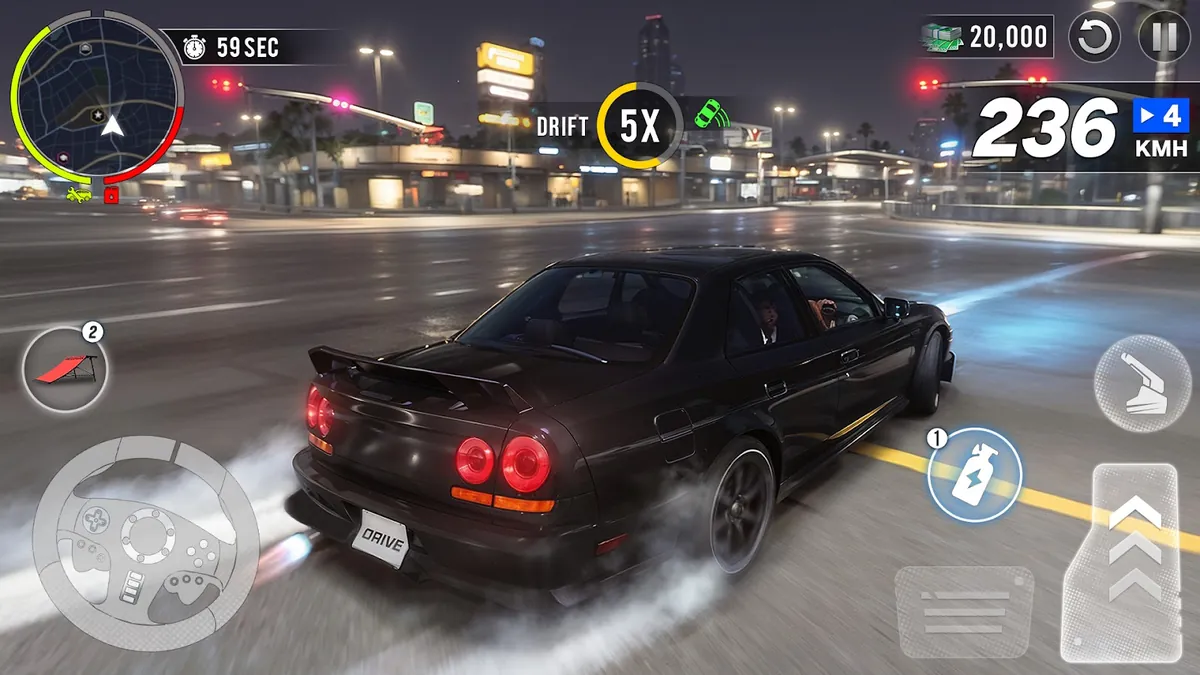
Drive Zone Online’s DRIFT mode drops you into a session with other players and ranks everyone by total drift points — you compete for the most drift points, not for a finish line. The official Google Play listing describes it plainly: most drift points wins.
Your points build on four things. Angle — how sideways the car is while still moving forward. Speed — the pace you carry through the slide. Duration — how long the drift stays alive. And chains — corners and transitions linked without a straight, a spin or a crash in between. A spin or a wall hit breaks the run and throws away what that slide was building, which is why the fastest route up the table is consistency: moderate angle, decent speed, zero resets.
One more reason to practise everywhere: drift points scored in free roam also pay out money, so the hours you spend linking corners at the port are quietly funding your garage at the same time.
5 Beginner Mistakes That Kill Your Drifts
- Too much car, too soon. Learning in the fastest thing you own turns every input into an emergency. Drop down to something moderate until the technique is automatic.
- Steering into the slide. New players steer the way the car is pointing and spin instantly. Counter-steer: point the front wheels where you want to go, not where the nose is aimed.
- Full throttle everywhere. The throttle is a dimmer, not a switch. Most angle control happens in the middle of the pedal’s travel, in small squeezes.
- Chasing angle before control. A shallow drift you can hold and exit cleanly teaches more — and scores better across a full run — than a near-backwards moment that ends in the wall.
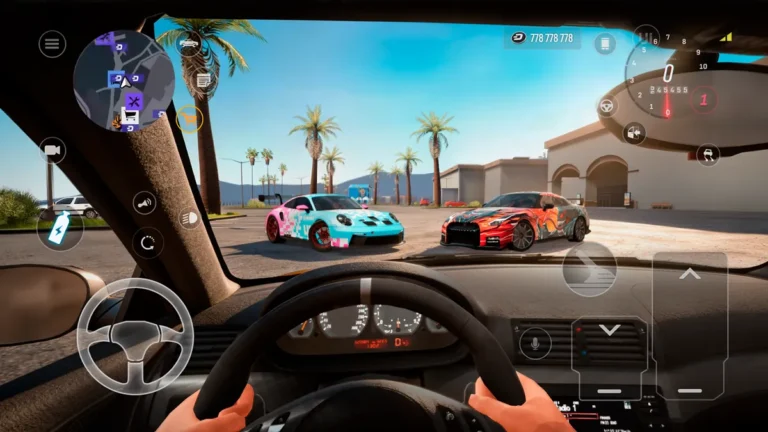
- The wrong camera. The detailed interior view is immersive, but from the driver’s seat you cannot see your own slide angle. Learn with the external camera, where the car’s angle is obvious, and switch views once the technique is in your hands.
Your Practice Route
The 20×20 km open world gives you a natural training ladder, and it is all free roam — no timers, no opponents, no pressure.
Start at the port or the desert airfield. Both are wide, flat and open, with room to spin harmlessly while you repeat the six steps. Drill big, lazy circles in both directions first. When you can hold a full circle at a steady angle, move to figure-eights — they force a transition in the middle, which is the exact skill chaining is built on.
Graduate to the racing track, where the same corners come around every lap and you can measure yourself honestly: same corner, same entry speed, ten attempts in a row. Then take it to the city, where the corners are tighter, street furniture punishes greed, and entries are slower. Finish the session by entering DRIFT mode and seeing how the technique holds up when other players’ scores are on the board next to yours.
Frequently Asked Questions
What is the easiest car type to learn drifting in?
A rear-wheel-drive car with moderate power and a calm, forgiving chassis — something that rotates slowly enough for you to catch your own mistakes. Avoid the hypercars while learning, however tempting they look, and avoid all-wheel drive, which fights the slide. Our best drift cars guide ranks the specific cars to start with, for both the standard game and the unlocked garage.
Why does my car keep spinning out?
Spinning means the rear gained more angle than your inputs could catch. The usual causes, in order: the handbrake was held a moment too long, too much throttle arrived too early, or the counter-steer arrived late. Fix them in that order — tap the handbrake, never hold it; roll the throttle on instead of stabbing it; and start counter-steering the instant the tail moves, not after the slide has already developed.
How do I earn more drift points?
Hold the slide longer, at a consistent angle and a decent speed, and link corners into chains without spins or wall taps — angle, speed, duration and clean chains are what the score counts. One long, tidy run beats a highlight reel of near-crashes every time. And because free roam pays money for drift points as well, your practice sessions earn while you learn.
Last updated: November 10, 2026