Engine Swaps in Drive Zone Online: What They Do & When They’re Worth It
An engine swap in Drive Zone Online replaces your car’s stock engine with a more powerful unit, dramatically increasing horsepower and torque — but it costs a lot of credits and often requires supporting upgrades like better tires, transmission, and brakes. It’s worth it for drag builds and underpowered cars you love, but a waste for drift cars where balance matters more than raw power.
Few upgrades in Drive Zone Online feel as transformative — or as expensive — as an engine swap. One moment you’re driving a modest coupe; the next, it’s got double the horsepower and a completely different personality. But that transformation comes with a hefty price tag and some real trade-offs that the game doesn’t exactly advertise.
This guide explains what engine swaps actually change, what they really cost, when they’re worth every credit, and when you’re better off spending your money elsewhere.
What Is an Engine Swap, Exactly?
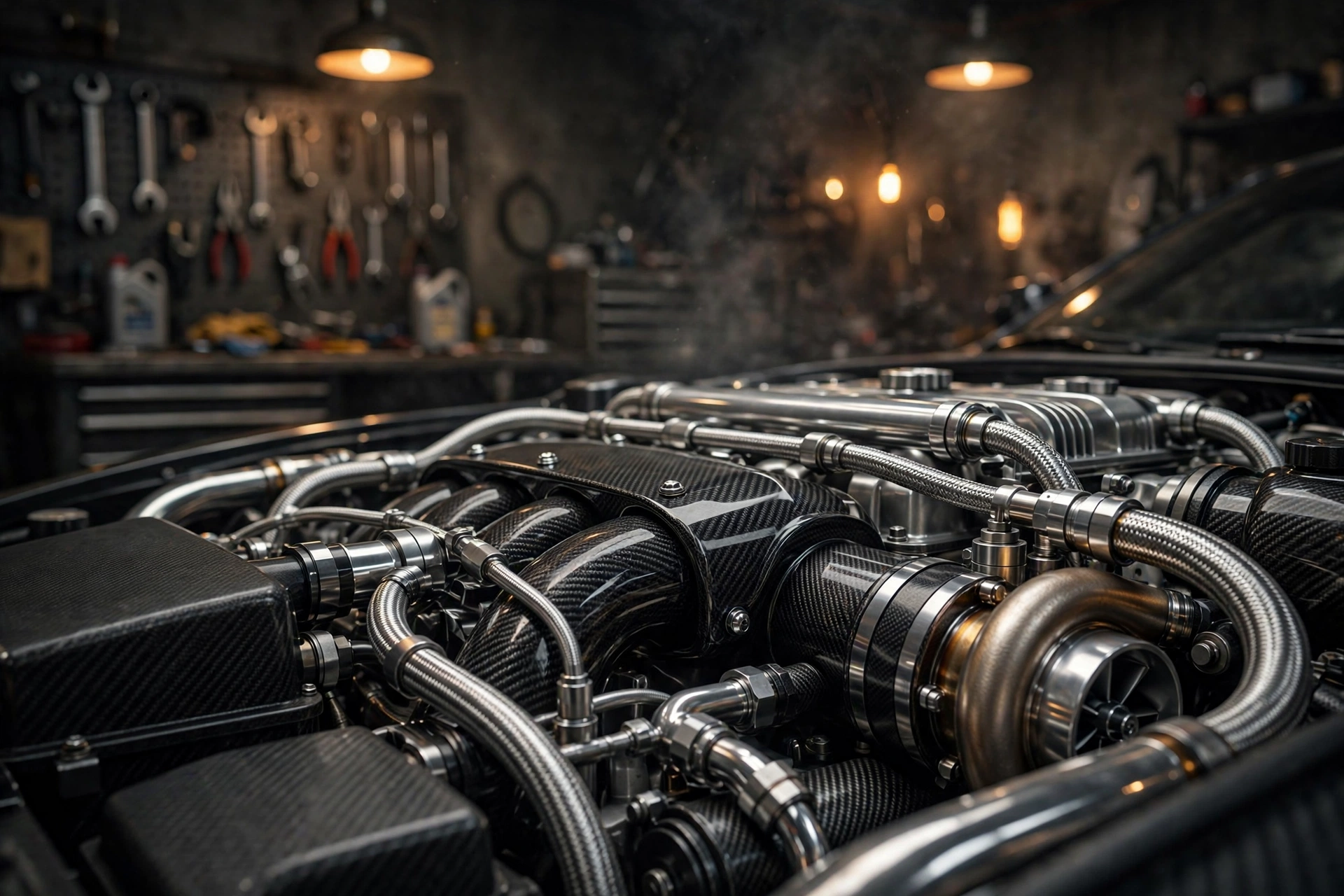
In real life, an engine swap means pulling the factory engine out of a car and dropping in a completely different one — a bigger, more powerful, or just more interesting powerplant. Drive Zone Online recreates this faithfully: the swap replaces your car’s entire stock engine with a performance unit that changes the car’s power figures, and often its weight distribution, redline, and even its exhaust note.
It’s not the same as regular engine upgrades. Bolt-on upgrades — intakes, exhausts, turbos — improve the engine you already have, with modest, predictable gains. An engine swap is a fundamentally different starting point: you’re changing the heart of the car, which is why the performance jump is so much bigger and the cost so much higher.
Swaps are typically unlocked after you’ve already invested in a car. The game treats them as an advanced modification, which makes sense — they’re priced for players who’ve already committed to a build, not for someone test-driving their third car of the week.
What Actually Changes After a Swap
Power and torque: the obvious part
This is why people swap. A good engine swap can add a huge percentage to your horsepower and torque figures — far more than any combination of bolt-on parts. Acceleration improves dramatically, top speed usually rises, and the car pulls harder through every gear. If your build’s goal is raw straight-line performance, nothing else in the upgrade shop competes.
Power delivery and redline
Less obvious but equally important: the new engine delivers its power differently. Some swap engines are high-revving screamers that need to be kept near redline; others are torque monsters that pull hard from low RPM. This changes how you drive the car — your shift points, your corner exits, even your gearing choices all need rethinking after a swap.
Weight and balance
Here’s the catch most players miss. A bigger engine usually weighs more, and that weight sits over the front axle. Adding significant mass to the nose of a car changes how it turns, how it brakes, and how it rotates. A swap that adds 150 horsepower but ruins the car’s balance can actually make it slower around a technical track — faster in a straight line, worse everywhere else.
Sound
Don’t underestimate this one. The new engine sounds different — often much better. For a lot of players, the soundtrack alone justifies the cost. You’ll hear it every second you drive, which is more than you can say for most upgrades.
The Real Cost of an Engine Swap
The sticker price of the swap itself is only the beginning. A responsible engine swap budget includes:
The swap itself. This is the big number — engine swaps are among the most expensive single purchases in the game, often costing as much as a mid-tier car outright.
Supporting power upgrades. A new engine with stock bolt-ons is leaving performance on the table. To get the full benefit, you’ll want to upgrade the intake, exhaust, and forced induction around the new engine — more spending.
Transmission and drivetrain. Double the power through a stock gearbox is a recipe for sluggish shifts and broken launches. Upgraded transmission, clutch, and sometimes drivetrain components are practically mandatory.
Tires and brakes. More speed means you need more grip to use it and more stopping power to survive it. Budget for the best tires and brakes the car can take.
Suspension tuning. Remember the weight change? You’ll likely need suspension adjustments to restore the handling balance the swap disturbed.
Add it all up and a “complete” engine swap project typically costs multiples of the swap’s sticker price. Go in with your eyes open: the engine is the headline purchase, but the supporting cast is what makes it work. If you’re on the latest version, check current prices in-game, as balance updates occasionally adjust upgrade costs.
When an Engine Swap Is Worth It
Drag builds: almost always
Drag racing is about one thing — covering a short distance as fast as possible. Power-to-weight dominates everything, handling balance barely matters, and the run is over in seconds. This is the engine swap’s natural habitat. If you’re building a dedicated drag car, the swap is usually the single highest-impact purchase you can make.
You love an underpowered car
Sometimes you fall for a car’s looks, sound, or handling, but its stock engine is underwhelming. An engine swap lets you keep the car you love while fixing the one thing wrong with it. This is the most satisfying use of a swap — it turns “great chassis, shame about the engine” into your favorite car in the garage.
Top-speed and highway builds
If your thing is V-max runs and highway pulls, the swap’s top-end gains are exactly what you want. Combined with gearing for high speed, a swapped engine turns a quick car into a genuinely fast one.
You’ve maxed everything else
If the car already has full bolt-ons, the best tires, upgraded transmission, and dialed suspension — and you still want more — the swap is the logical final step. It’s the capstone of a build, not the foundation.
When It’s a Waste of Money
Drift builds: usually a mistake
Drifting rewards balance, predictability, and controllable power delivery — not maximum horsepower. An engine swap’s extra weight over the front axle hurts rotation, and excessive power makes the car twitchy and tiring to drift. Most of the best drift cars in the game run moderate power with excellent balance. If drifting is the goal, spend on suspension, differential, and tires instead.
The car is already strong
Swapping the engine in a car that’s already fast is diminishing returns at luxury prices. The percentage gain is smaller, the cost is the same, and you risk upsetting a chassis that was already well sorted. Save the credits.
Early in the game
If you’re still building your garage, one engine swap costs as much as two or three complete cars. Variety beats one overpowered project early on — you’ll learn more, have more fun, and be better prepared for different event types.
You haven’t done the basics
Putting a race engine in a car on stock tires with stock brakes is like putting a jet engine on a bicycle. If the fundamentals aren’t upgraded, the swap’s power is unusable. Tires, brakes, and suspension first — always.
How to Pick the Right Swap
When the game offers multiple swap options, don’t just pick the biggest number. Consider:
Match the engine to the chassis. A lightweight car doesn’t need — and can’t use — the most powerful swap available. Overpowering a light chassis creates a car that’s fast in theory and undriveable in practice. The sweet spot is enough power to transform the car without overwhelming it.
Think about power delivery. For street and circuit driving, a broad torque curve you can use everywhere beats a peaky engine that’s only fast near redline. For drag, the opposite can be true. Pick the character, not just the headline figure.
Check the weight penalty. If the game shows weight changes, pay attention. A swap that adds a lot of front weight needs suspension work to compensate — factor that into your decision and your budget.
Consider the soundtrack. You’re going to hear this engine for hundreds of hours. If two swaps are close on performance, pick the one that sounds better. No shame in it.
The Upgrade Order That Actually Makes Sense
If you’re building toward a swap, do it in this order and you’ll never waste money:
1. Tires. The single highest-impact upgrade per credit in the game. Everything else builds on grip.
2. Brakes. You can’t use speed you can’t control. Upgrade stopping power before adding power.
3. Suspension. Dial in the handling balance while the car is still at stock power — it’s easier to feel what changes.
4. Bolt-on engine upgrades. Extract everything the stock engine offers. This also tells you whether you actually need a swap or just needed the basics.
5. Transmission. Make sure the car can deliver its power effectively.
6. The engine swap. Last, not first. By now you know the car intimately, the chassis can handle the power, and the swap delivers its full potential instead of overwhelming an unfinished build.
Following this order also protects you from the most common swap regret: spending a fortune on power, then discovering the car needs just as much spent on everything else to use it. For a sense of how different builds feel at the top end, our Drive Zone Online review covers the game’s performance ceiling in detail.
Frequently Asked Questions
Can I undo an engine swap if I don’t like it?
In most cases you can revert to the stock engine, but you typically won’t get a full refund — expect to lose a significant portion of what you paid. Treat every swap as a committed decision, not an experiment. If you’re unsure, test the concept by fully upgrading the stock engine first.
Does an engine swap affect the car’s class or PI rating?
Yes — a big power increase usually pushes the car into a higher performance bracket. This matters for events with class restrictions: a swapped car that was perfect for a tournament might no longer be eligible. Always check event rules after major modifications.
Is engine swapping better than just buying a faster car?
It depends on what you value. Buying a faster car is simpler and often cheaper overall. Swapping makes sense when you’re attached to a specific car, when the swap creates something unique, or when you’ve already invested heavily in the chassis. As a pure performance-per-credit calculation, a new car usually wins.
Why does my car handle worse after an engine swap?
Almost certainly the added front weight. The heavier engine changed the car’s balance, and the stock suspension wasn’t set up for it. Stiffen the front suspension, adjust the balance rearward if the game allows it, and give yourself time to adapt to the new weight transfer. If problems persist — crashes, physics glitches, or saves not applying — check our error-fix guide.
What’s the best all-around engine swap for beginners?
There’s no single answer since it depends on the car, but the beginner-friendly rule is: pick a moderate swap, not the maximum one. A mid-tier swap on a balanced chassis gives you a thrilling car you can actually drive, while the biggest swap often creates a handful. Learn car control first; chase huge numbers later.
Want more Drive Zone Online tips & tricks?